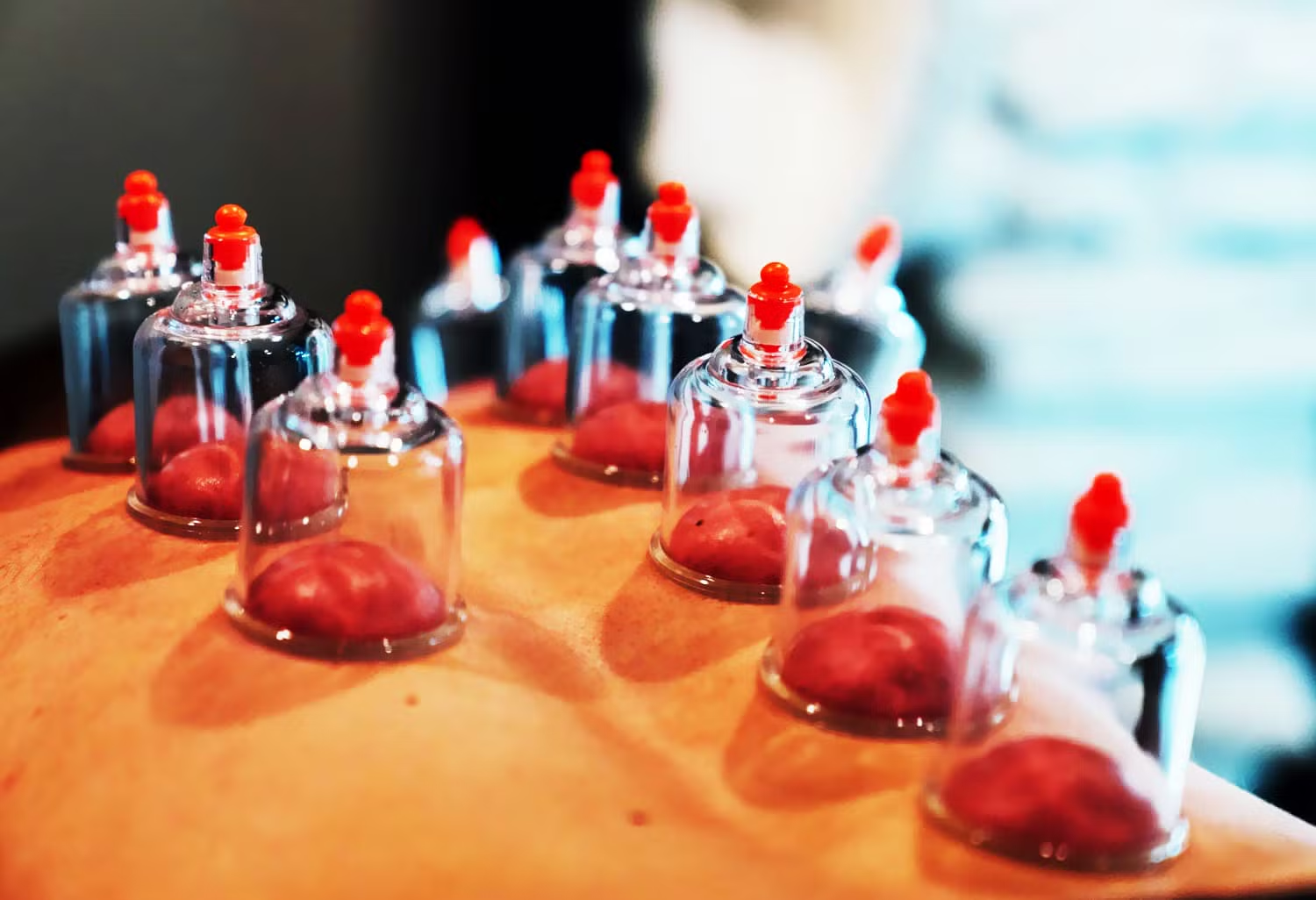
Cupping therapy (hijamah) has long been widely recognized as a traditional treatment that is highly beneficial for physical health.
However, not many people are aware that cupping therapy also has a close relationship with a patient’s psychological condition.
This is especially evident in its ability to relieve stress, anxiety, and mental fatigue.
A number of complementary health practitioners state that cupping therapy does not work solely on the body, but also affects the nervous system, emotions, and inner calm.
Physiologically, cupping therapy helps improve blood circulation and reduce muscle tension.
This condition has a direct effect on the central nervous system, including the brain, which plays an important role in regulating emotions and mood.
When blood flow and oxygen supply to the brain improve, the body responds with a sense of relaxation.
In this state, the body produces endorphins, which are known as natural calming hormones.
As a result, patients experience a calmer mind, more stable emotions, and improved sleep quality.
In the field of health, there is a term known as psychosomatic, which refers to conditions where mental and emotional pressure trigger physical complaints.
Prolonged stress can cause symptoms such as headaches, neck pain, stiff shoulders, chest tightness, and easy fatigue.
Cupping therapy performed at specific points such as the neck, shoulders, and upper back is very helpful in releasing physical tension caused by psychological burdens.
On average, patients report and feel emotional relief after undergoing cupping therapy.
In addition to its physical effects, the cupping process also provides psychological benefits through therapeutic interaction.
Patients who feel that their complaints are listened to and handled with empathy tend to feel more cared for and valued.
This condition creates a sense of safety and comfort, which is greatly needed by individuals experiencing high levels of stress.
For some patients, cupping therapy becomes a moment of reflection and mental recovery, especially for those facing life pressures, family conflicts, or emotional exhaustion.
In Islamic teachings, cupping therapy is a sunnah of the Prophet Muhammad (peace be upon him). This belief provides strong spiritual value, especially for Muslim patients.
This spiritual dimension fosters inner peace, a sense of surrender, and renewed hope in the healing process.
This spiritual aspect plays a major role in supporting mental health, as a calm inner state has been proven to help accelerate psychological recovery.
Despite its many benefits, cupping therapy is not a substitute for medical treatment or psychological therapy.
For mental disorders such as severe depression, bipolar disorder, or schizophrenia, patients still require professional care.
Cupping therapy can be used as a complementary therapy to help reduce stress levels, enhance relaxation, and improve quality of life.
Therefore, cupping therapy is related to patients’ psychological well-being through a holistic approach that encompasses physical, mental, and spiritual aspects.
By helping the body relax, stabilizing emotions, and calming the inner self, cupping therapy supports overall mental health.
This approach is increasingly relevant amid the rising cases of stress and mental health disorders in society.
To maintain optimal health, it is recommended to undergo cupping therapy twice a month to achieve maximum benefits.
Why Cupping Therapy Uses Incisions Instead of Needle Punctures: A Scientific Explanation
The blood released during wet cupping therapy also known as cupping therapy affects the central nervous system and activates several analgesic (pain-relieving) systems.
Pain experienced during oxidant therapy or cupping stimulates the release of neurotransmitters such as endogenous opioids.
These substances include β-endorphins, which can suppress pain signals in the spinal cord.
Another mechanism that may explain the analgesic effect of oxidant therapy is strong sensory stimulation, which results in pain reduction for varying periods of time.
This occurs due to the blockage of signals from sensory nerves that carry pain impulses.
When blood is released through incisions and suction pressure is applied, swelling occurs in the cupped skin area.
This process triggers the release of β-endorphins and adrenocortical hormones into the circulation.
Both play an important role in inhibiting inflammation, particularly in inflammatory joint conditions.
In conclusion, oxidant therapy has several advantages. These include observable improvements in patients’ clinical conditions, especially in pain scale measurements, and a significant reduction in disease activity.
Wet cupping therapy can also be combined with conventional medical treatments for patients suffering from diabetes mellitus, kidney disease, heart disease, rheumatoid arthritis, cancer, and other illnesses.
The removal of blood through incision or scraping methods can influence conditions such as hyperglomerular activity (overfunction of the kidneys), glomerular ischemia (cell death in the kidneys), glomerulosclerosis, tubulointerstitial injury, and proteinuria (protein leakage into urine).
Therefore, oxidant therapy can increase the production of nitric oxide, leading to the conclusion that when oxidants are released, these substances are also expelled from the body.
This condition causes relaxation and vasodilation of blood vessels, thereby reducing vascular resistance, which in turn lowers blood pressure.
During suction, the nerves in the skin are stimulated. This stimulation is transmitted to the posterior horn of the spinal cord through A-delta and C nerve fibers, and via the spinothalamic tract to the thalamus, resulting in the release of endorphins.
Endorphins are small peptides released into the hypothalamus that improve mood and enhance feelings of calmness.
With a positive and calm emotional state, the body naturally becomes more relaxed, and heart rate gradually decreases.
As heart rate decreases, cardiac output also declines. One of the factors influencing blood pressure is cardiac output.
Therefore, it can be concluded that a decrease in cardiac output leads to a reduction in blood pressure.
The blood released during oxidant therapy has high viscosity (thickness). This is because the blood contains lipoproteins at levels far exceeding normal values.
Wet cupping therapy can remove both hydrophilic and hydrophobic substances in the form of lipoproteins.
High levels of harmful lipoproteins can cause damage, as normal physiological processes within cells cannot function optimally, and in some cases, cells may lose their function entirely.
Lipoproteins are transported in the bloodstream in two protein components: low-density lipoprotein (LDL) and high-density lipoprotein (HDL).
LDL particles are larger than HDL particles, making LDL more prone to becoming trapped in blood vessels.
The removal of lipoproteins through oxidant therapy is expected to improve blood flow within the blood vessels.
Blood pressure is also influenced by blood viscosity. In other words, reducing blood viscosity through oxidant therapy contributes to lowering blood pressure.
High salt intake also affects increased blood pressure. Elevated salt concentration in plasma increases plasma viscosity.
This increase raises vascular resistance, causing arterial pressure to rise.
According to theories of hypertension caused by free radicals or lipid peroxides, endothelial cells in blood vessels experience dysfunction when exposed to these harmful substances.
Lipid peroxides can cause endothelial dysfunction, leading to reduced synthesis of nitric oxide (NO) and prostacyclin, which are natural vasodilators in the body.
Endothelial dysfunction also increases the production of thromboxane A2 and endothelin, which are strong vasoconstrictors.
An imbalance between vasodilators and vasoconstrictors increases vascular resistance and results in hypertension.
Oxidative stress occurs in the early stages of chronic kidney disease and contributes to hypertension.
Oxidative stress can cause nitric oxide deficiency, even though NO plays a crucial role in lowering blood pressure.
Endothelial dysfunction leads to inhibition of microvascular nitric oxide activity. Therefore, oxidant therapy specifically targets capillary blood located near the surface of the skin, where the tissue layer is very thin.
This procedure can only be performed by highly skilled practitioners. Why? Because the skin surface contains many barriers and long-stored toxins or residual metabolic substances.
Through wet cupping therapy using incision, scraping, slicing, or splitting techniques, the blood intended— as prescribed by the Prophet Muhammad (peace be upon him)— can be obtained.